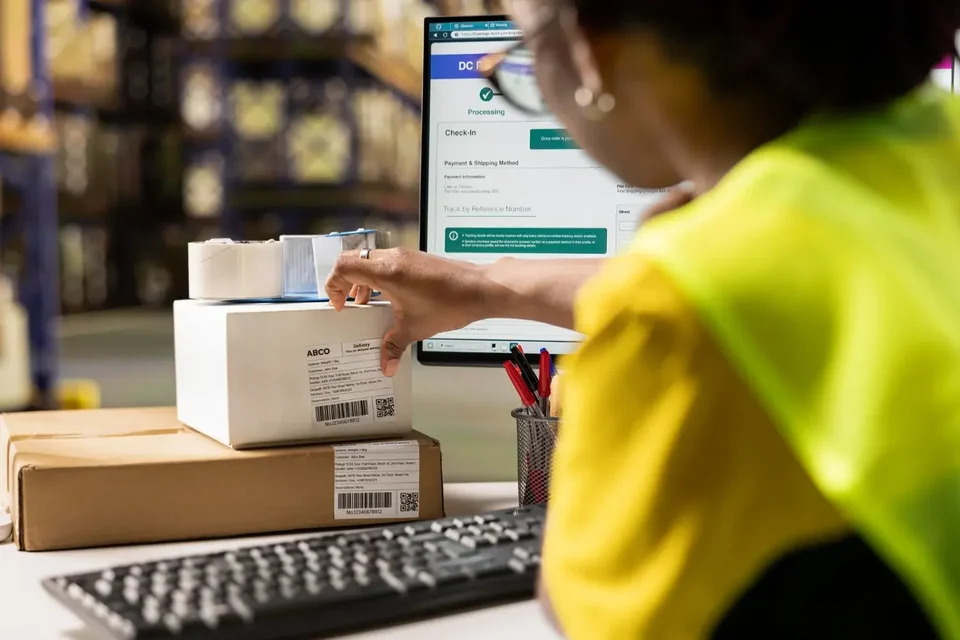
Order fulfillment services play a vital role in helping e-commerce businesses manage the complex logistics involved in delivering products to customers. As online shopping continues to grow, businesses need efficient systems to process orders, manage inventory, and ensure timely shipping. An order fulfillment service takes care of these essential tasks, allowing retailers to focus on growing their business and improving customer experiences.
An order fulfillment service is a company that manages the entire process of receiving, processing, packing, shipping, and handling returns for customer orders. For e-commerce businesses, efficient order fulfillment is critical for controlling operating costs, maintaining inventory accuracy, and meeting customer expectations. Choosing the right fulfillment partner can significantly impact business success, customer satisfaction, and long-term growth.
What Is E-Commerce Order Fulfillment?
E-commerce order fulfillment refers to the complete process of delivering an online purchase from a retailer to a customer. The process begins when inventory is received and stored in a warehouse until a customer places an order. Once an order is received, the fulfillment provider picks the product from storage, carefully packs it, and prepares it for shipment.
After the package is shipped, the fulfillment process continues with tracking, delivery management, and return handling when necessary. Many fulfillment providers also offer advanced reporting tools that give businesses valuable insights into inventory levels, shipping performance, order accuracy, and customer satisfaction. These tools help companies improve efficiency and make informed decisions about their logistics operations.
Order fulfillment services are only one approach to managing online orders. Some businesses choose to handle fulfillment internally, while others rely on dropshipping models that eliminate the need to store inventory. However, partnering with a fulfillment provider often simplifies operations by allowing businesses to transfer packing and shipping responsibilities to experienced logistics professionals. This arrangement enables retailers to focus on maintaining adequate inventory levels while the fulfillment partner manages the delivery process.
What Are the Advantages of Outsourcing Order Fulfillment?
Outsourcing order fulfillment offers several advantages beyond simplifying daily logistics operations. One of the most significant benefits is cost reduction. Fulfillment providers typically work with multiple clients and ship large volumes of products, allowing them to negotiate lower shipping rates with carriers. Businesses can take advantage of these savings without having to manage shipping contracts on their own.
Working with a fulfillment partner also provides access to established infrastructure, including warehouse facilities, trained staff, packing materials, and shipping systems. Instead of investing heavily in storage space and labor, businesses can leverage these resources through their fulfillment provider, helping reduce overhead expenses.
Another major benefit is increased efficiency. Order fulfillment requires time, attention to detail, and operational expertise. By outsourcing these tasks, business owners and employees can focus on higher-value activities such as marketing, customer service, product development, and business growth. This improved focus can lead to stronger overall performance and better customer experiences.
For businesses looking to expand into new markets, fulfillment providers can offer strategic advantages through multiple warehouse locations. Rather than shipping every order from a single headquarters, products can be stored closer to customers in different regions. This approach often results in faster delivery times, reduced shipping costs, and improved customer satisfaction, making geographic expansion more achievable.
What to Look for in an Order Fulfillment Service
Outsourcing fulfillment may not be necessary for every business, but it often becomes a practical solution when order volumes increase or storage capacity becomes limited. If packing and shipping consume a significant portion of your time, partnering with a fulfillment provider may help streamline operations and support future growth.
Cost is often one of the first factors businesses consider when evaluating fulfillment services. While affordability is important, choosing the lowest-cost provider may not always deliver the best results. Reliable order fulfillment directly affects customer satisfaction, and poor service can lead to shipping delays, damaged products, negative reviews, and lost sales.
It is important to research a fulfillment provider’s reputation before making a decision. Customer reviews, testimonials, and references can provide valuable insight into service quality and reliability. Businesses should also evaluate whether a provider has experience handling products similar to their own, especially if items require specialized packaging, storage conditions, or shipping procedures.
Additional considerations include order volume requirements, product size and weight restrictions, warehouse locations, technology integrations, and inventory management capabilities. A fulfillment provider should be equipped to support your current needs while offering the flexibility to accommodate future growth. Selecting the right partner can help improve operational efficiency, enhance customer satisfaction, and create a stronger foundation for long-term business success.