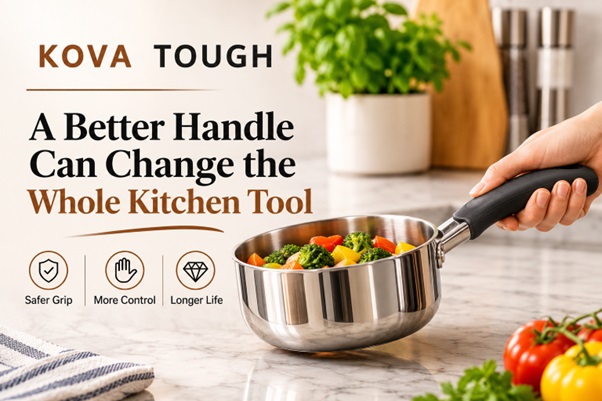
A kitchen tool may already do most of what a brand needs. Its working head is useful, the basic construction suits the task and the product fits the planned assortment. Yet the handle feels too short, the grip does not match the rest of the range or the presentation does not suit the intended customer.
In that situation, adapting an existing product can be a practical starting point. The work is to identify exactly what should stay, what should change and what those changes mean for the finished item.
Start with a real reference
Select a product that is close to the intended result. Review it in the hand and, where appropriate, consider the task it will perform. Note the features you want to retain: perhaps the profile of a turner, the capacity of a ladle or the overall proportions of a serving tool.
Then list the proposed changes separately. A new logo position is a different request from a longer handle or a new connection between the handle and working head. Separating them makes it easier to discuss feasibility, cost and samples.
KOVA Tough’s ODM kitchenware development service begins with an existing product direction and considers the requested adaptations against construction, tooling and sampling requirements.
Follow the consequences of a small change
Imagine a retailer asks for a ladle handle to be 20 mm longer. That figure is an illustrative request, not a confirmed modification to a particular product. Even a change of that size can affect reach, balance, handle strength or the way the ladle fits in its packaging.
If the handle is moulded, a new shape may require a tooling discussion. If the overall length changes, the pack and shipping carton may need a review. If the material changes, the buyer may also need different supporting information for the intended market.
A change map helps keep the discussion clear:
- Keep: the features that already perform the intended job.
- Change: the dimensions, materials or presentation to be reviewed.
- Check: the handling, fit, tooling, documentation and pack consequences.
Review the whole range, not just one piece
A consistent handle can give a range a recognisable appearance, but not every kitchen tool has the same mechanical demands. A ladle, a slotted turner and a skimmer each distribute weight differently. A handle connection that suits one may need adjustment for another.
Ask which details can be shared across the selected products and which must remain specific to each item. Review proposed pieces together at the sample stage. The goal is a family resemblance that still allows every tool to perform its own task comfortably.
Test the decorated and packaged version
A plain sample can help assess construction and handling. A decorated sample adds a chance to review logo size, position and contrast on the actual surface. A packaging sample shows whether the item fits, stays protected and can be removed without difficulty.
Record the sample version and any requested revisions. A change to one part of the product may affect another approval, so keep the drawing, sample, artwork and pack details connected. Discuss inspection criteria and any product-specific testing before the final order is agreed.
Recheck documentation when materials change
For products intended for the United States, the US Food and Drug Administration’s food-contact guidance explains that regulatory status depends on the components and conditions of use. A food-contact substance notification, where relied on, applies to the identified manufacturer and conditions, rather than automatically to a similar substance from another source. If an adaptation changes a food-contact material or coating, ask the supplier which evidence still applies to the revised product. Review the actual composition and intended use before making a compliance claim.
Agree who can use the design
A factory’s existing platform, a buyer’s artwork and a newly developed component may have different ownership arrangements. If exclusivity matters, identify the product, market, duration and terms to be discussed. Do not rely on the presence of a logo as evidence that a product design is exclusive.
KOVA Tough brings 20 years of factory experience to its new kitchenware brand and describes in-house tooling, moulding and assembly capabilities in Yangjiang. That experience makes it a useful partner for reviewing the practical effects of a proposed adaptation.
The strongest product change begins with a clear purpose. When the buyer can explain why a feature needs to change, the factory can help assess how to make the improvement work across the whole product.