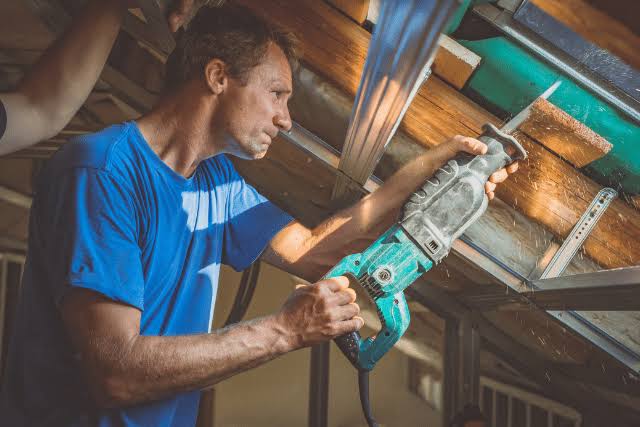
Few tools demand as much from their construction as a reciprocating saw. The forces involved in demolition work—vibration, torque, impact, and heat—are relentless. A tool that handles these demands well becomes a trusted companion on the job. One that doesn’t becomes an expensive frustration. Reciprocating saws come in enough varieties and configurations that buyers face a genuinely complex decision, particularly when trying to match a specific tool to a specific type of project work.
The following breakdown addresses the most important considerations to evaluate before buying.
Defining Your Project Scope Before You Shop
Before evaluating any saw specifications, it helps to define the scope of work you’re preparing for. Demolition of large structural elements—removing load-bearing walls, cutting through thick timber framing, or dismantling old decking—calls for a full-size, high-power model capable of sustained heavy cutting.
Renovation work that involves more targeted tasks—removing a section of drywall, cutting out a damaged window frame, trimming pipe in a finished bathroom—may be better served by a lighter, more maneuverable model. Attempting to use an oversized tool in a confined renovation space creates control problems; using an underpowered model for structural demolition creates performance problems.
The clearest path to a good purchase is an honest assessment of the work ahead.
Corded Power: Understanding Amperage Demands
For corded reciprocating saws, amperage is the most direct measure of available power. Higher-amperage models sustain cutting performance through harder materials and longer continuous use without thermal shutdown. For professional demolition work, models at the upper end of the amperage range provide a clear performance advantage.
Lower-amperage corded models are lighter and sufficient for renovation tasks involving softer or thinner materials. They’re also a practical choice for users who want the reliability of a corded connection without the additional weight of a higher-powered unit.
Circuit capacity at the work location also matters. High-amperage saws drawing power from an undersized circuit or an overloaded extension cord will underperform. Always check that the power supply matches the tool’s requirements.
Cordless Systems: Battery Platform Strategy
For cordless buyers, the purchase decision extends beyond the saw itself. Battery platform compatibility—the ability to share batteries across multiple tools from the same manufacturer—significantly affects the long-term value of the investment.
Buyers already invested in a particular cordless tool ecosystem benefit from selecting a reciprocating saw within the same platform. This eliminates the need to manage multiple charger types and allows battery resources to be shared flexibly across all tools on site.
For those building a cordless toolkit from scratch, selecting a platform that offers a broad range of compatible tools—drills, impact drivers, circular saws, angle grinders—provides the most flexibility over time.
Assessing Vibration Levels Objectively
Vibration is more than a comfort issue. Prolonged exposure to high vibration levels from power tools is associated with long-term health effects, particularly in the hands and wrists. Professional users who operate a reciprocating saw regularly should prioritize anti-vibration engineering in their purchase decision.
Effective vibration reduction systems use counterweights or dampening mechanisms that absorb the oscillating forces generated by the saw’s drive mechanism before they reach the handle. The difference between a high-vibration and low-vibration model becomes very apparent during extended cutting sessions.
Grip material also contributes. Rubber-over-mold handles absorb residual vibration that the internal mechanisms don’t fully eliminate, providing a secondary layer of protection for the user.
Keyless Blade Change Systems: Not All Are Equal
Virtually all modern reciprocating saws feature tool-free blade changes, but the quality and mechanism of these systems varies. The best systems allow fast, single-handed blade swaps with a firm, wobble-free lock once the blade is installed.
Weaker systems require two hands to operate, or fail to hold the blade tightly enough, resulting in lateral movement during cuts. Before purchasing, it’s worth investigating reviews specific to the blade change mechanism, as this is a feature that affects daily workflow more than almost any other.
Protective Features Worth Having
Beyond the core performance specifications, several protective features add meaningful value in professional settings:
Electronic brake: Stops the blade immediately when the trigger is released, reducing risk when repositioning or setting the tool down.
Overload protection: Monitors motor temperature and load, shutting down the tool before damage occurs rather than after.
Lock-on switch: Allows sustained operation without holding the trigger continuously, useful for long cuts that would otherwise cause hand fatigue.
These features are more commonly found on mid-to-high-range models but increasingly appear across a broader range of price points.
Testing Before Committing
Where possible, handling a reciprocating saw before purchasing provides useful information that specifications alone cannot convey. Balance, grip comfort, trigger feel, and overall weight distribution all affect real-world usability. A saw that looks excellent on paper but feels unwieldy in hand will underperform on the job.
Trade shows, hardware store demonstration areas, and equipment rental options all provide opportunities to evaluate how a specific model feels in use before committing to the purchase.
The Long View on Value
Purchase price is only one component of a reciprocating saw’s total cost of ownership. Factor in blade compatibility and cost, the availability and price of replacement parts, battery system investment for cordless models, and the tool’s expected service life under your typical workload.
A tool that costs more upfront but lasts significantly longer and requires fewer repairs often represents better value than a cheaper alternative that needs replacement within a few years of regular use. Evaluate the full cost picture before making a decision based on initial price alone.