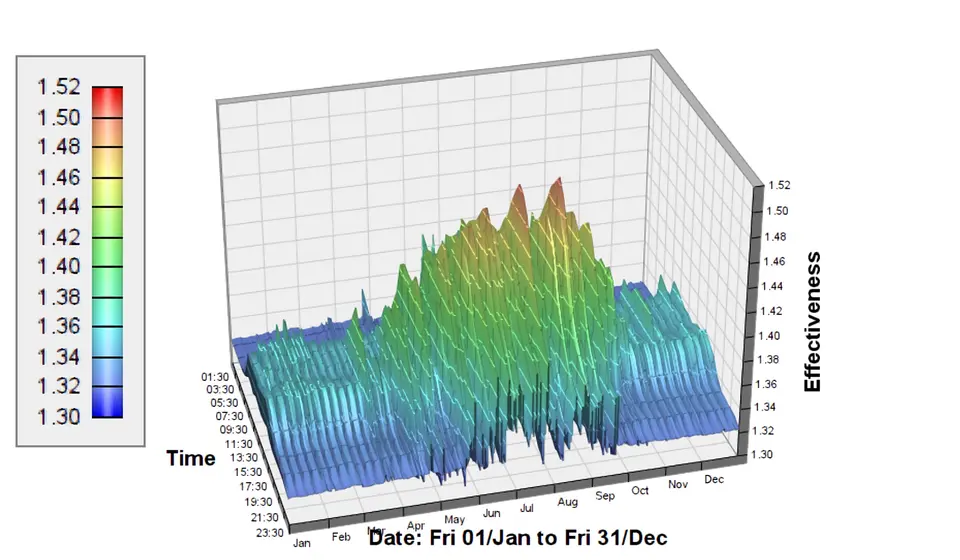
Energy modeling is a powerful analytical process used in engineering and industrial operations to understand how energy is consumed within a system and how that consumption changes when operational or design adjustments are made. It helps organizations improve efficiency, reduce costs, and support long-term sustainability goals by providing a clear picture of energy use patterns.
At its core, energy modeling enables companies to evaluate how energy flows through processes such as heating, cooling, steam systems, electricity usage, and compressed air networks. While many organizations may understand overall energy consumption, energy data modeling software reveals where energy is actually used, where it is lost, and how it can be optimized.
For example, a facility may know its total boiler fuel usage but lack visibility into how steam is distributed across processes or where inefficiencies such as heat loss or poor insulation occur. Similarly, organizations may plan system upgrades or process changes but lack clarity on whether existing energy infrastructure can support new demands.
Energy modeling helps answer these questions by creating a structured simulation of energy systems, allowing engineers and decision-makers to evaluate both current performance and future scenarios under changing operational conditions.
Two Main Approaches to Energy Modeling
Energy modeling typically follows two primary methodologies: statistical modeling and mechanistic modeling. Each approach offers different strengths depending on the available data and project objectives.
Statistical Modeling
Statistical modeling uses historical operational data to identify patterns and relationships in energy usage. By analyzing large datasets, engineers can determine how energy demand correlates with production rates, environmental conditions, or equipment performance.
This approach is increasingly supported by advances in data analytics, machine learning, and artificial intelligence, which enhance the ability to detect trends and make predictions based on historical behavior.
Statistical models are particularly useful for optimizing existing operations, identifying inefficiencies, and understanding past performance.
Mechanistic Modeling
Mechanistic modeling is based on physical principles such as thermodynamics, fluid dynamics, and heat transfer. It uses mathematical equations to simulate how energy moves through a system based on equipment design, process configuration, and operating conditions.
This method provides deep insights into system behavior, enabling engineers to simulate new plant designs, evaluate equipment changes, and predict energy usage under different operating scenarios.
However, mechanistic models require strong engineering expertise and detailed system knowledge. Their accuracy depends heavily on the quality of assumptions and input data used during model development.
Combining Modeling Approaches
In many modern applications, hybrid modeling techniques are used. These combine physical modeling frameworks with data-driven methods to improve accuracy and adaptability.
Hybrid models and digital twin technologies allow real-time data to refine simulation results continuously, creating dynamic systems that reflect actual operating conditions more closely.
What Does Energy Modeling Do?
Energy modeling provides detailed insights into how energy is consumed across industrial systems and how usage changes over time. It typically evaluates entire facilities, including process operations and supporting utilities.
In industrial environments, energy systems such as steam, refrigeration, compressed air, and electricity are interconnected and often complex. Energy modeling helps break down these interactions to identify inefficiencies and optimization opportunities.
For example, steam may be used for heating processes, driving mechanical work, or acting as an input in production systems. Without detailed analysis, it is difficult to determine where energy losses occur or how system performance can be improved.
Similarly, refrigeration systems often operate under varying loads due to seasonal changes, production demand, and process requirements. Energy modeling helps identify optimal operating strategies to reduce energy consumption while maintaining performance.
Electricity usage is also highly variable and distributed across many systems, making it difficult to track without structured analysis. Energy models help identify high-consumption equipment, compare performance across similar assets, and detect inefficiencies.
By providing a structured understanding of energy flows, energy modeling enables continuous optimization and operational improvement.
What Does Energy Modeling Require?
Successful energy modeling requires a long-term commitment to continuous monitoring, analysis, and improvement.
While initial implementation may deliver quick efficiency gains, sustained benefits depend on ongoing tracking and refinement. Without continuous updates, performance improvements may diminish over time as operating conditions change.
A strong energy modeling program integrates data collection, analysis, and reporting into a continuous feedback loop. This allows organizations to identify opportunities, implement improvements, and verify results over time.
By combining structured data systems with evolving analytical models, companies can maintain performance improvements and uncover new opportunities for efficiency gains.
Why Do Companies Need Energy Modeling?
Energy modeling provides a structured framework for understanding complex energy systems across industrial and commercial facilities. It integrates multiple energy streams such as steam, electricity, cooling, and compressed air into a unified analytical model.
This allows organizations to understand how different systems interact and influence overall energy performance.
Energy modeling also supports decision-making across multiple departments. Operational teams can identify inefficiencies, procurement teams can forecast energy demand, sustainability teams can calculate carbon emissions, and management teams can evaluate performance metrics across facilities.
In addition, energy modeling systems can generate tailored reports for different stakeholders, ensuring that relevant insights are accessible to each part of the organization.
What Are Some Examples and Applications of Energy Modeling?
Energy modeling is widely used in industrial environments to improve efficiency and reduce operational costs.
In compressed air systems, energy modeling can reveal imbalances between similar machines, identifying cases where one unit consumes significantly more power than another due to performance degradation or maintenance issues.
In large-scale industrial facilities, mechanistic energy models are used to simulate mass and energy balances across entire processes. These models help engineers evaluate the impact of operational changes such as adjusting setpoints, modifying production rates, or upgrading equipment.
Energy modeling can also identify interactions between system components, ensuring that improvements in one area do not negatively impact another.
In many cases, organizations using energy modeling have achieved significant energy savings and improved return on investment through targeted optimization strategies.
Advanced applications include the development of soft sensors, which estimate difficult-to-measure variables using mathematical models, and reduced-order models, which simplify complex systems for real-time monitoring and control.
Energy modeling can also be applied across multiple facilities to compare performance, identify best practices, and optimize overall portfolio energy efficiency.
Conclusion
Energy modeling is a critical tool for improving industrial efficiency, reducing energy costs, and supporting sustainability initiatives. By providing detailed insights into how energy is consumed and how systems interact, it enables organizations to make informed decisions that enhance performance.
Whether using statistical methods, mechanistic simulations, or hybrid approaches, energy modeling helps businesses understand current operations, predict future performance, and identify opportunities for continuous improvement.
As energy systems become more complex and sustainability requirements increase, energy modeling will continue to play an essential role in optimizing industrial operations and supporting long-term energy management strategies.